Living archive
Some crops cannot be conserved as if they were files on a shelf
Seed banks are elegant, but not every plant fits the seed-bank story. Clonal crops, sterile lines, recalcitrant seeds, and valuable vegetative material forced conservationists to keep some diversity alive in other ways.
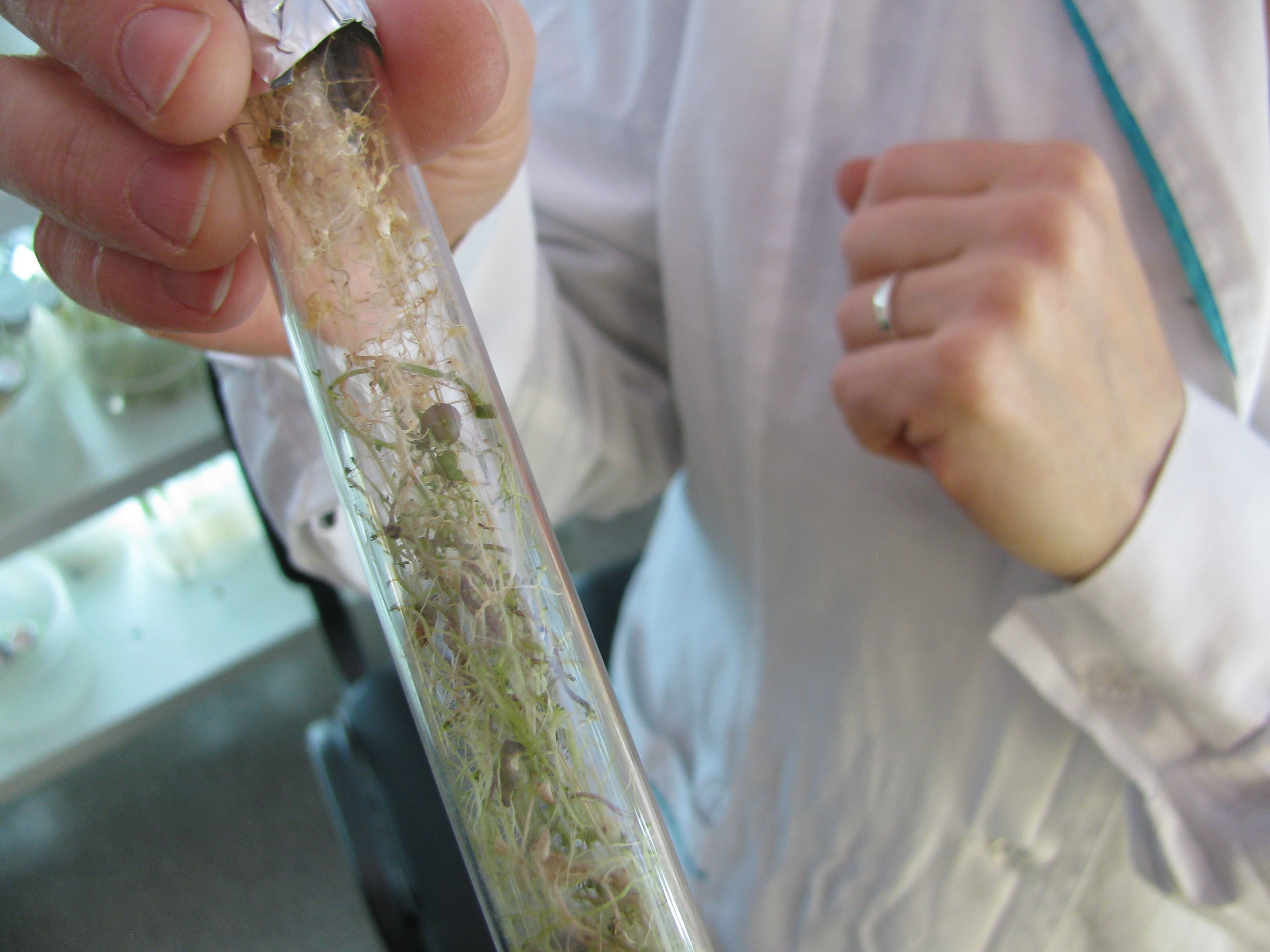
In vitro conservation made the jar into a kind of living archive. Material could be maintained under controlled conditions, slowed down, duplicated, tested, moved, and sometimes backed up through cryopreservation. The point was not just survival. The point was usable continuity.
That continuity depends on records. An accession without identity, source, transfer history, and health context is not a conservation asset in the same way. It is a biological object with missing memory.
A genebank culture is not simply stored. It is held in a chain of evidence.
Slow growth
Slowing a culture down can be an act of preservation
CGIAR describes in vitro slow-growth storage as a way to extend subculture intervals for vegetatively propagated crops. That is a subtle but profound shift: the lab is no longer only pushing growth forward. It is tuning time.
Time tuning changes the record. Transfer intervals, storage conditions, viability observations, contamination notes, and source status become part of whether a collection can be trusted later.
For a working propagation lab, the conservation lesson is practical. If you want future decisions to be better, preserve the context that explains why material was held, moved, discarded, multiplied, or tested.
Health context
Clean-stock workflows are evidence systems
Clean-stock programs are often discussed as if cleanliness were a simple label. In practice, responsible language depends on scope: what was tested, when, by whom, with what method, for which pathogen or condition, and under which program authority.
xPlant can help connect observations, source notes, media context, tasks, images, and references to test status. It should not be used as a substitute for lab diagnostics, regulatory certification, or phytosanitary authority.
That distinction is not legal hedging. It is scientific respect. A good record makes claims narrower, stronger, and easier to review.
Accession memory
The potato microtuber is a small object with a large record behind it
Potato is one of the crops that makes in vitro conservation feel concrete. A microtuber in a vessel can represent genetics, geography, breeding history, phytosanitary context, storage strategy, and future distribution.
The image is tidy. The record is not. That is exactly why conservation workflows need systems that can handle lineage and uncertainty at the same time.